
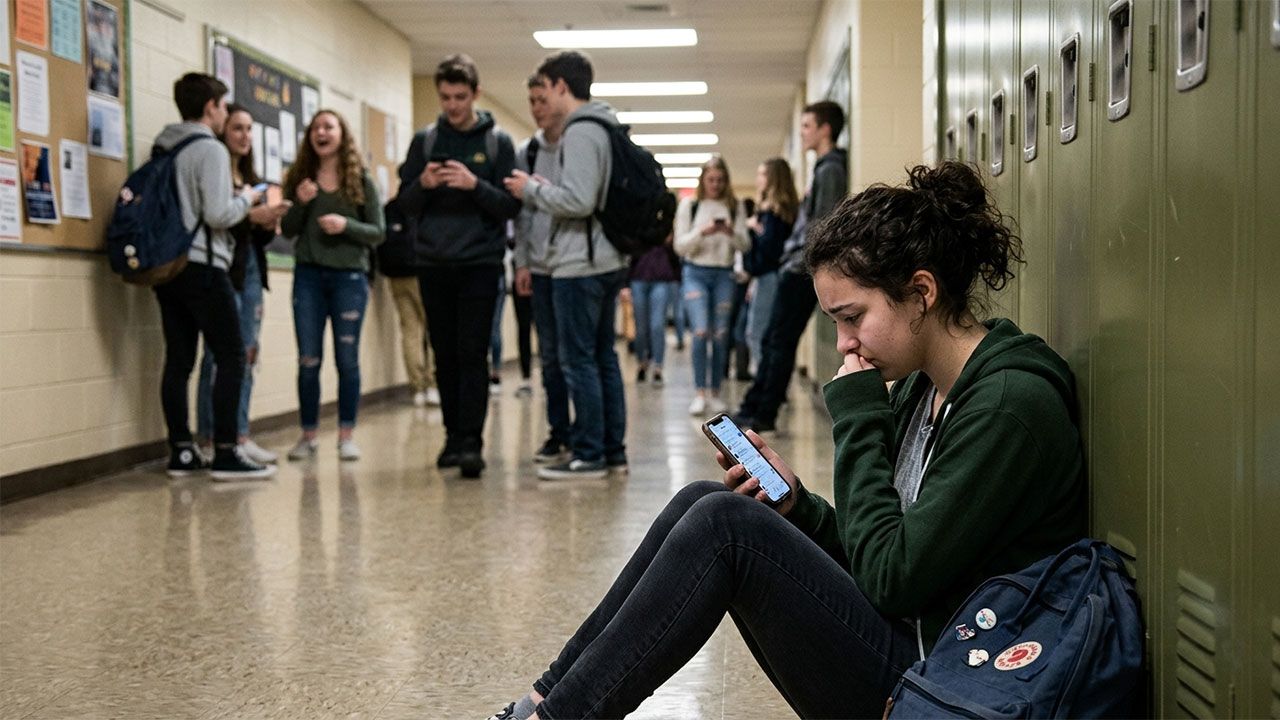
When most of us think back to bullying in school, we picture something that happened in a specific place at a specific time — the hallway, the bus, the locker room. The school day ended, and for better or worse, so did the torment. Today's students don't have that escape hatch. For many kids, the bully comes home with them, lives in their pocket, and pings their phone at midnight.
Cyberbullying — the use of digital technology to harass, threaten, embarrass, or target another person — has become one of the most pressing challenges facing schools. And because it happens largely out of adult sight, it's also one of the hardest to address.
What Cyberbullying Actually Looks Like
Cyberbullying isn't just one behavior. It shows up in many forms, and some of them can be surprisingly subtle:
Harassment through direct messages, group chats, or comment sections is the most recognizable form. But cyberbullying also includes spreading rumors or screenshots to humiliate someone, creating fake accounts to impersonate or mock a classmate, deliberately excluding someone from group chats where social life happens, sharing embarrassing photos or videos without consent, and "pile-ons," where a large group targets one student at once.
What makes these behaviors especially damaging is their reach and permanence. A cruel remark in a hallway is heard by a few people and fades. A cruel post can be screenshotted, shared, and resurfaced indefinitely — and the victim knows it.
Why It Hits So Hard
Research consistently links cyberbullying to anxiety, depression, sleep problems, declining academic performance, and school avoidance. A few features of the digital world amplify the harm:
It's inescapable. There's no safe zone. The harassment follows students into their bedrooms, onto family vacations, and into every quiet moment they check their phone. It's public. Humiliation in front of five classmates is painful. Humiliation in front of five hundred followers — with a permanent record — is devastating.
It's often anonymous. Not knowing who is behind an attack can make a victim suspicious of everyone, poisoning their entire social environment. Adults often can't see it. Bruises are visible. A toxic group chat isn't. Many students suffer for months before any adult finds out, and many never tell anyone at all, often because they fear losing access to their devices.
Why Students Stay Silent
One of the most consistent findings in cyberbullying research is that kids underreport it. The reasons are worth understanding, because they shape how adults should respond. Students worry that telling a parent will result in their phone being taken away — which feels like being punished for being victimized. They fear retaliation or being labeled a snitch. They may feel ashamed, or believe adults won't understand the platforms involved or won't be able to do anything anyway.
This means the burden can't rest on victims to come forward. Schools and families have to build environments where reporting feels safe and where adults are paying attention to warning signs: sudden withdrawal from devices or obsessive checking of them, mood changes after being online, declining grades, dropped friendships, and reluctance to go to school.
What Schools Can Do
Effective responses go beyond punishing offenders after the fact. The schools that handle this best tend to work on several fronts at once.
Clear policies that cover off-campus behavior. Cyberbullying often happens outside school hours but spills into the school day. Policies should define cyberbullying explicitly, spell out consequences, and clarify when off-campus conduct falls under school authority.
Anonymous reporting channels. When students can report without exposing themselves, reporting rates rise. Many schools now use apps or online forms for exactly this purpose.
Digital citizenship education. Teaching students about empathy online, the permanence of digital content, and how to be an "upstander" rather than a bystander works better as prevention than any punishment does as a cure. Bystanders are the sleeping giant of bullying prevention — most incidents have witnesses, and when peers push back or report, harassment often stops.
Training staff. Teachers can't intervene in dynamics they don't recognize. Staff need to understand the platforms students use and the signs that something is wrong.
Restorative approaches alongside consequences. Zero-tolerance policies alone tend to drive behavior further underground. Approaches that require accountability while addressing the underlying social dynamics tend to produce more lasting change.
What Parents Can Do
Parents are often the last to know, but they're also the first line of support. A few principles help:
Keep communication open and judgment-free, so your child knows that telling you about a problem won't automatically mean losing their phone. Ask about their online life the way you'd ask about their school day — with curiosity, not interrogation. If your child is targeted, resist the urge to respond impulsively: don't reply to the bully, do preserve evidence with screenshots, use blocking and reporting tools on the platform, and loop in the school. And watch your own modeling — kids learn how to treat people online partly by watching how the adults around them behave.
The Bottom Line
Cyberbullying isn't a technology problem that can be solved by banning phones, and it isn't a discipline problem that can be solved by suspensions. It's a relationship and culture problem that happens to play out on screens. The schools and families making real progress are the ones treating it that way — building cultures of empathy and accountability, keeping lines of communication open, and making sure no student has to face the bully in their pocket alone.
If you're a student reading this and you're being targeted: it's not your fault, it won't last forever, and telling a trusted adult is not weakness — it's the first step toward making it stop.
View our cyber bullying course
View our cyber bullying course

Created with